
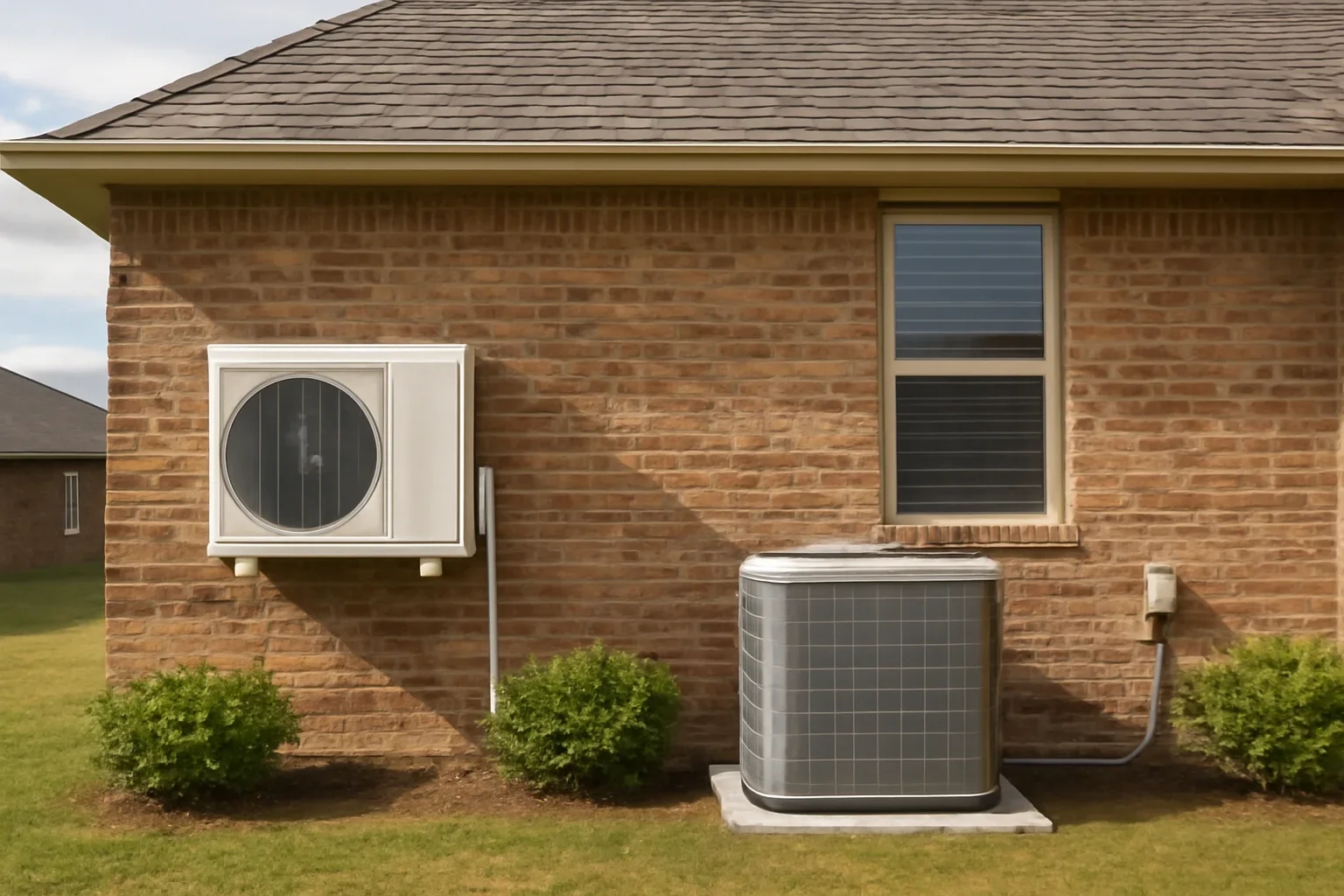
Quick Answer: Central air is usually the stronger fit for whole-home ducted cooling when the ductwork is in good condition. Mini-splits make more sense for additions, garage conversions, homes without ducts, or specific rooms that the central system cannot keep comfortable on its own.
How the Two Options Differ in Real Life
The decision rarely comes down to which technology is newer or which SEER rating looks better on paper. It comes down to how the house is laid out, what comfort problem you are actually trying to solve, and what the installation path realistically looks like.

The right answer depends on the home's layout, duct condition, and what comfort problem is actually being solved.
Central air
A central ducted system moves conditioned air through your home's duct network from a single air handler or furnace. It is the most common setup in Oklahoma City homes and works well when the ductwork is reasonably tight, properly sized, and in decent condition. One thermostat controls the whole house, which most homeowners find simple and familiar. A central system replacement is typically the most straightforward path when the ducts are already there and working.
Mini-splits
A mini-split — also called a ductless system — consists of an outdoor compressor connected to one or more indoor wall-mounted heads. Each head conditions a specific zone independently, with its own remote or smart control. Because there are no ducts, there are no duct losses — which can be a meaningful efficiency advantage in homes with older or leaky ductwork. Mini-splits are particularly useful for additions, sunrooms, detached garages, upper floors that overheat, and any space the central system has never conditioned well.
Hybrid situations
Some Oklahoma homes benefit most from a combination — a properly serviced central system for the main living areas, plus a single-zone mini-split in one stubborn room or addition. This approach avoids a full duct overhaul while solving the specific comfort problem, and it is often more cost-effective than replacing or extending the entire central system.
The Questions That Usually Decide It
Before comparing equipment specs, it helps to work through a few practical questions about the home and the problem you are trying to fix.
What is the current duct situation?
If the home has solid, well-sealed ductwork that is sized correctly for the space, central air is typically the cleaner and more cost-effective path. If the ducts are old, leaky, undersized, or missing entirely, the mini-split conversation becomes much stronger. Fixing bad ductwork alongside a central system replacement adds significant cost — sometimes enough to make a ductless approach competitive on total installed price.
Are you solving a whole-home problem or one room?
A hot upstairs bedroom, a new addition, a garage conversion, or a home office that never stays comfortable may not need a full central-system overhaul. A single-zone mini-split targeted at that space is often the faster, cheaper, and more effective solution. Replacing the entire central system to fix one room usually does not produce the result people expect.
How important is room-by-room control?
Central air runs on a single thermostat, which means the whole house moves together. Mini-splits let each zone run at its own setpoint. For households where different people have noticeably different comfort preferences, or where some rooms are rarely used, the independent zone control of a mini-split setup can justify the higher upfront cost.
What does winter look like for this space?
Mini-splits are heat pumps — they provide both cooling and heating. For summer cooling, they perform well in Oklahoma's heat. For winter, standard air-source mini-split heat pumps lose efficiency significantly below 25°F, which Oklahoma winters can reach. If the mini-split is intended to be a year-round heating and cooling solution, look specifically for cold-climate-rated models, or plan for a backup heat source during the hardest cold snaps.
Mini-Split vs Central Air at a Glance
| Situation | Usually the Stronger Fit |
|---|---|
| Whole-home replacement with solid existing ducts | Central air |
| Addition, garage conversion, or one stubborn room | Mini-split |
| Home with no ductwork or serious duct problems | Mini-split often deserves a close look |
| Prefer one thermostat for the whole house | Central air |
| Different comfort needs in different rooms | Mini-split (multi-zone) |
| Budget-sensitive whole-home replacement | Central air — multi-zone mini-split whole-home setups can exceed central system cost |
| Year-round heating and cooling for an addition | Mini-split — replaces both a window unit and a space heater in one system |
Why Oklahoma Homes Produce Both Answers
Oklahoma City's housing stock is varied — newer construction with well-designed duct systems sits alongside 1960s and 1970s homes with undersized returns, leaky flex duct, and rooms that have never been comfortable in summer. That mix is why there is no single right answer for OKC homeowners.
Homes with established, functional ducted systems almost always make more sense with central air for a whole-home replacement. The infrastructure is already there, the installation is straightforward, and a modern high-efficiency system on good ducts performs well in Oklahoma's Climate Zone 3A conditions — 100°F summer peaks, high humidity, and genuine winter cold snaps.
Homes with older layouts, problem additions, or significant duct issues often produce a different answer. Pouring money into a new central system on poor ductwork frequently delivers disappointing results — the equipment is fine but the delivery system undermines it. In those cases, a ductless solution for the problem space, or a ductless whole-home approach, can be a more honest investment.

Smith Brothers has served Oklahoma City-area homeowners since 1999 — across Edmond, Norman, Moore, Yukon, Midwest City, Mustang, Nichols Hills, Del City, The Village, and Bethany.
Frequently Asked Questions
Is a mini-split always more efficient than central air?
Not automatically. Mini-splits avoid duct losses, which gives them an efficiency advantage in homes with leaky or poorly insulated ductwork. But a well-sealed, properly sized central system on good ducts can be just as efficient in practice. Efficiency depends on the specific equipment, the home's construction, and how it is used — not the equipment category alone.
Can a mini-split replace central air for a whole house in Oklahoma?
It can, but it is not the right fit for every home. A multi-zone mini-split system can cover an entire house without ducts, but the upfront cost for multiple indoor heads is significant, and some homeowners find managing individual room units less convenient than a single thermostat. It makes the most sense for homes without existing ductwork or with serious duct problems that would cost as much to fix as to bypass entirely.
What is the typical cost difference in Oklahoma?
A single-zone mini-split for one room or addition typically runs $3,000–$6,000 installed. A whole-home central AC and furnace replacement in OKC generally costs $6,200–$12,000 depending on home size and scope. A multi-zone mini-split covering an entire home can exceed the cost of a central system. The right cost comparison depends on what you are actually trying to solve, not just the equipment price.
Are mini-splits a good fit for Oklahoma's winters?
For cooling, mini-splits perform well in Oklahoma's heat. For heating, standard air-source models lose efficiency significantly below 25°F — which OKC winters can reach. If you plan to rely on a mini-split for year-round heating and cooling, look specifically for a cold-climate-rated model, or plan for a backup heat source during the hardest cold snaps.
Can Smith Brothers help compare both options for my home?
Yes. The right answer depends on your home's layout, duct condition, the specific comfort problem you are trying to solve, and your budget. Smith Brothers has served Oklahoma City-area homeowners since 1999 and can walk through both options with a real assessment of your situation.
Need a Local Answer for Your Own Home?
Tell us whether you are cooling the whole house, an addition, or one problem room — and we will help you compare mini-split and central air options that actually fit your situation and budget.
Smith Brothers Heat & Air — family-owned, serving Oklahoma City since 1999.
Go to AC Installation PageHelpful Next Steps
- AC Installation — central air installation options, what the process looks like, and how to request an estimate.
- Heat Pump Installation — how heat pumps compare for Oklahoma homes, including mini-split and ducted heat pump options.
- Get a Quote — share your home details and comfort goals and we will put together a scope-based estimate.