
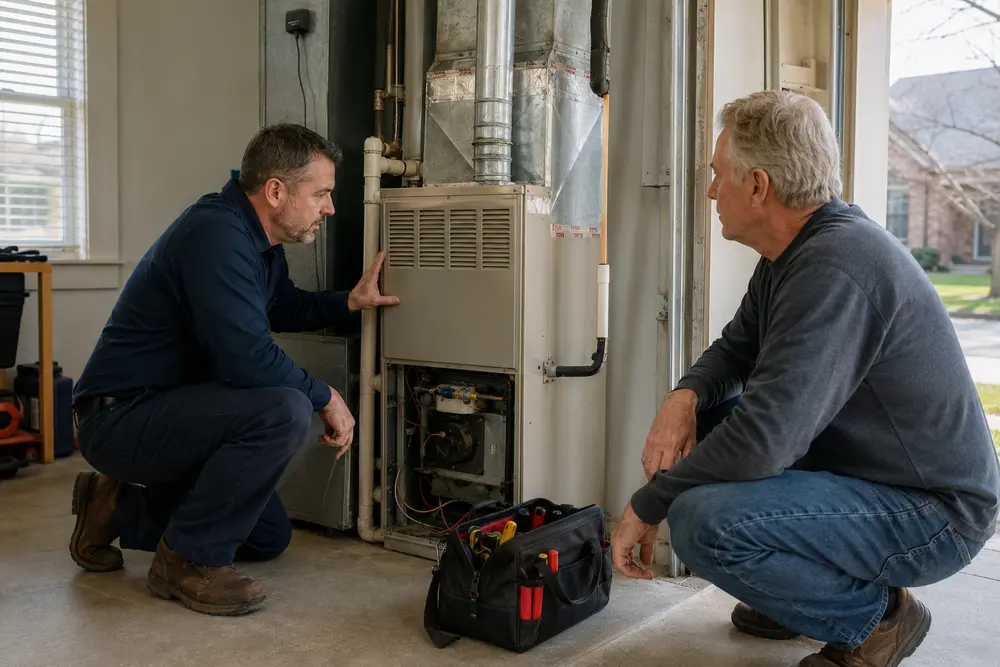
When an air conditioner or furnace fails during Oklahoma weather, the immediate question is usually, “Can it be fixed?” The more useful question is whether that repair buys dependable service at a sensible cost. A failed capacitor on a well-maintained system is different from another major repair on equipment that has already become noisy, uneven and expensive to operate.
This guide explains how Oklahoma City homeowners can compare repair with replacement without using age or price alone. The right answer comes from the full pattern: what failed, the system’s condition, how often it has needed work, whether the home is comfortable and what the next several years are likely to cost.
When an HVAC repair is usually the practical choice
A repair can be the best use of your budget when a qualified diagnosis points to one correctable fault and the rest of the system is in sound condition. Examples may include a failed electrical component, thermostat issue, drain blockage or another contained problem. The component name alone does not decide the case; access, system condition and the cause of the failure also matter.
- The system has been reliable and has not needed repeated service calls.
- The current problem is isolated rather than part of a wider deterioration pattern.
- Heating and cooling remain even across the home when the unit is operating properly.
- The repair restores normal performance without approaching the cost of a better long-term option.
- Parts are available and the equipment is not showing evidence of multiple near-term failures.
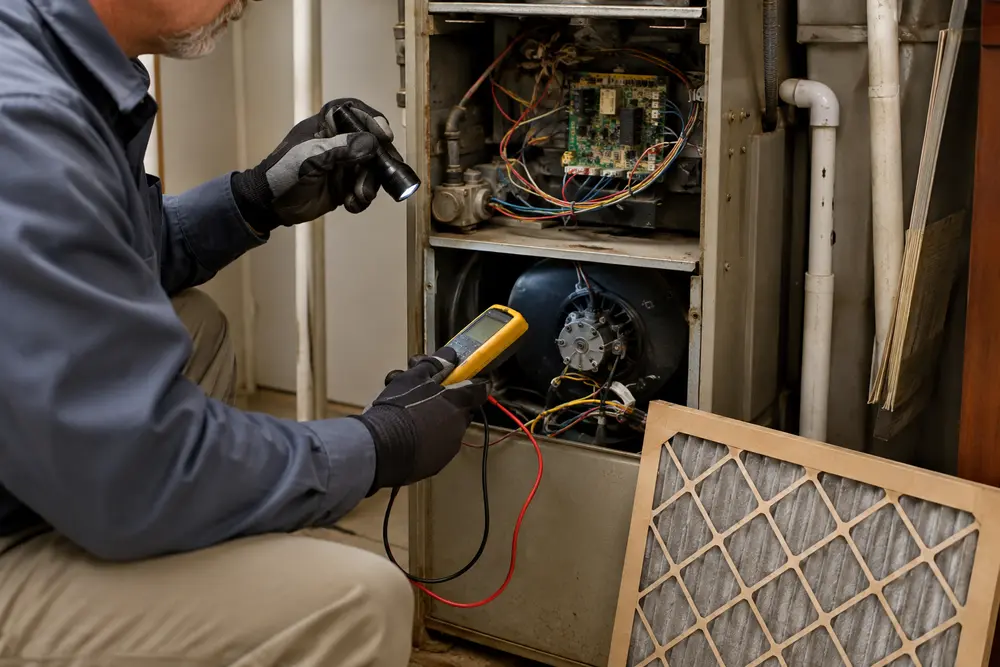
A professional diagnosis should explain both the failed part and why it failed. For example, replacing an electrical component without addressing overheating, restricted airflow or an underlying motor problem may only postpone another breakdown.
When replacement deserves serious consideration
Age is a useful screening factor, but it is not an expiration date. ENERGY STAR recommends having air conditioners and heat pumps over about ten years old evaluated, particularly when frequent repairs, rising energy use or comfort problems are also present. A furnace may remain serviceable longer, depending on maintenance, operating conditions and the condition of critical components.
Repairs are becoming a pattern
One repair does not make a system unreliable. Repeated failures across different components are more telling. Review invoices from the last two or three seasons. If service calls are becoming more frequent or more expensive, calculate what has already been spent and what likely remains at risk.
A major component has failed
A compressor, heat exchanger or other major failure changes the calculation because the repair can be costly and other aged components remain. The correct decision still depends on warranty coverage, equipment condition and the remaining expected service life—not the component name by itself.
The house is no longer comfortable
Hot rooms, long run times, excessive cycling and weak airflow may indicate equipment trouble, but they can also come from duct leakage, insulation gaps, air leakage or control problems. Replacing equipment without diagnosing the whole system can leave the original comfort problem in place.
Efficiency has declined
Compare similar weather periods rather than one unusually hot month. Dirty coils, a clogged filter, poor airflow and duct leakage can raise energy use without requiring replacement. If maintenance and repairs no longer restore reasonable performance, newer equipment may offer a better long-term path.
How to compare repair and replacement fairly
Do not compare only today’s repair invoice with the price of new equipment. Compare the likely cost and risk over the period you expect to remain in the home.
| Decision factor | Repair may fit when… | Replacement may fit when… |
|---|---|---|
| Failure history | This is an isolated event. | Breakdowns are recurring or spreading across components. |
| Comfort | Normal performance returns after the repair. | Rooms remain uneven or the system cannot keep up after causes are checked. |
| Cost exposure | The repair is modest and protects useful remaining life. | A large repair still leaves several aging components at risk. |
| Efficiency | Maintenance restores normal energy use. | Operating cost stays high despite correct maintenance and airflow. |
| Timing | You can repair without compromising safety or reliability. | A planned project avoids a rushed emergency replacement. |
For budget context, review the existing guide to new HVAC system costs in Oklahoma City. A useful replacement proposal should define the equipment, installation scope, duct or electrical corrections, controls, warranty and commissioning—not just a model number and total.
Replacement is the time to verify system size
The old unit’s capacity should not automatically become the new unit’s capacity. The original equipment may have been selected by a rough square-foot rule, and the home may now have different windows, insulation, air sealing, additions or usage patterns.
A residential load calculation estimates the home’s heating and cooling needs using its actual characteristics. Equipment selection then uses that load and manufacturer performance data. Right-sizing matters because oversized equipment can cycle too frequently, reduce comfort and shorten component life. Read the companion guide to Manual J load calculations in Oklahoma before comparing proposals.
Questions to ask before approving either option
- What failed, and what evidence confirms the diagnosis?
- Did another condition—such as airflow, drainage or electrical stress—contribute to the failure?
- What other components show measurable wear or damage?
- What parts and labour warranty applies to the repair?
- If replacing, how will the contractor determine capacity and verify airflow?
- Does the proposal include permits, removal, controls, commissioning and required corrections?
A second opinion is reasonable when the diagnosis is unclear, the repair is substantial or a replacement recommendation is based only on equipment age. Smith Brothers Heat & Air has served the Oklahoma City area since 1999 and can help homeowners understand the condition of the current system before choosing a path.
Get a clear repair-or-replace evaluation
Have the system diagnosed, compare the practical options and understand the proposed scope before committing.
Request an HVAC evaluationFrequently asked questions
Is it better to repair or replace an HVAC system?
Repair often makes sense for a younger, otherwise reliable system with one isolated and affordable fault. Replacement deserves serious consideration when age, recurring repairs, uneven comfort and declining efficiency appear together.
Should I replace an HVAC system that still uses R-410A?
Not solely because it uses R-410A. Existing systems can still be serviced. Refrigerant type should be considered together with equipment age, condition, parts availability and repair cost.
Should replacement equipment be the same size as the old system?
Not automatically. A residential load calculation should reflect the home’s current insulation, windows, air leakage, orientation and other characteristics before new equipment is selected.