
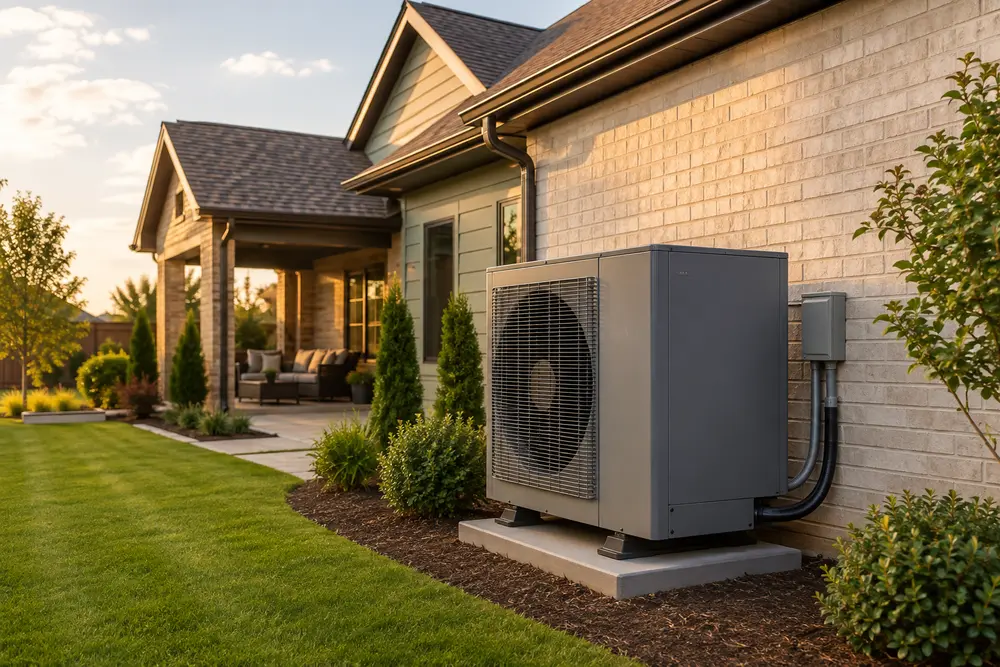
A heat pump can cool an Oklahoma home in summer and provide heating by moving heat indoors in winter. That two-way operation makes it an appealing replacement for a central air conditioner, especially when a homeowner wants an all-electric option or wants to reduce dependence on electric resistance heat.
Whether it is “worth it” cannot be answered from the equipment label alone. The comparison should use your existing furnace or electric heat, utility rates, home load, duct condition, backup-heat strategy, comfort priorities and complete installation cost.
How a heat pump handles Oklahoma heating and cooling
In cooling mode, an air-source heat pump works much like a central air conditioner: it moves heat from inside the home to the outdoors. In heating mode, the refrigerant cycle reverses and moves available outdoor heat indoors.
Modern equipment can operate during cold weather, but heating output and efficiency vary by model and outdoor temperature. That is why published performance data, local design conditions and a residential load calculation matter. The question is not simply whether a heat pump runs below freezing; it is how much capacity the selected system provides when the home needs it.
For more on winter operation, read how heat pumps perform in Oklahoma cold weather.
Situations where a heat pump may offer strong value
You currently use electric resistance heat
Electric furnaces, baseboard heat and resistance strips create heat directly from electricity. A heat pump moves heat and can use substantially less electricity for the same delivered heat under suitable conditions. This is one of the clearest comparisons to evaluate.
Your central air conditioner needs replacement
If the outdoor cooling system is already at the end of its service life, upgrading from an air conditioner to a heat pump may add a heating option while much of the cooling-side project would already be required. Existing ductwork may be reusable if it is properly sized, sealed and suitable for the airflow.
You want an all-electric home
A heat pump can provide central heating and cooling without on-site combustion as the primary heat source. The electrical service, backup heat, water heating and other gas loads should be reviewed before assuming a full fuel conversion is simple.
You want a dual-fuel option
A dual-fuel system combines a heat pump with a gas furnace. Controls use the heat pump under selected conditions and transition to the furnace when appropriate. The ideal changeover strategy depends on equipment performance, energy prices, comfort and system design.

All-electric and dual-fuel heat pump options
| Configuration | How it heats | Key planning issue |
|---|---|---|
| Heat pump with electric auxiliary heat | Heat pump is primary; resistance elements assist when controls call for them. | Electrical capacity and control settings affect cost and peak use. |
| Dual-fuel heat pump | Heat pump operates in selected conditions; gas furnace takes over when appropriate. | Balance point and changeover strategy should be configured intentionally. |
| Heat pump without large duct system | Ductless or multi-zone equipment serves selected areas. | Room layout, line-set routing and coverage determine whether it fits the whole home. |
Auxiliary heat is not automatically a design failure. It can be an intentional part of an all-electric system. The concern is uncontrolled or excessive resistance-heat use caused by poor sizing, incorrect controls, duct problems or inappropriate thermostat operation.
How to decide whether the numbers work
Request a comparison that identifies the baseline. “Saves energy” means little unless you know whether the comparison is with electric resistance heat, an older heat pump, a gas furnace or another system.
- Review at least 12 months of electric and gas use when available.
- Estimate the home’s current heating and cooling loads rather than reusing the old capacity.
- Use manufacturer performance at relevant outdoor temperatures.
- Model reasonable auxiliary-heat or dual-fuel operation.
- Include electrical, duct, control and comfort corrections in installed cost.
- Compare maintenance, warranties and expected service life.
No contractor can guarantee future utility prices or a precise bill reduction. A sound estimate states the assumptions so the homeowner can see what would change the outcome.
Correct sizing and airflow determine real performance
A heat pump should not be selected only by the tonnage of the old air conditioner. Heating capacity varies with outdoor temperature, and cooling oversizing can create short cycles and comfort problems. Start with a Manual J load calculation, then use manufacturer data to select the equipment.
Ducts must also support the required airflow. Leakage, undersized returns, restrictive filters and poorly balanced branches can reduce delivered capacity and increase noise. Replacing the outdoor unit without checking the air-distribution system leaves part of the performance question unanswered.
What changed for heat-pump incentives in 2026
OG&E’s current rebate page states that Oklahoma rebates are closed and will return in 2027. Other utility services or income-qualified programs may have different eligibility. Verify the exact program, service territory, installation date and equipment requirements before treating any incentive as part of the budget.
Incentives can change. The system should still make sense based on comfort, energy use, reliability and installed value without assuming a benefit that has not been confirmed.
A practical Oklahoma heat-pump decision checklist
- What heating system and fuel are you replacing?
- What are the home’s calculated heating and cooling loads?
- How much heating capacity does the proposed model deliver at local winter design conditions?
- Will the system use electric auxiliary heat, a gas furnace or another backup strategy?
- Are ducts, electrical service and controls ready for the selected system?
- Which incentives have been verified in writing for the installation date?
Smith Brothers has served the Oklahoma City area since 1999. Explore heat-pump installation options or compare the broader heat pump vs. furnace decision.
See whether a heat pump fits your Oklahoma home
Compare load, equipment performance, backup strategy and complete installation scope before choosing.
Request a heat-pump consultationFrequently asked questions
Are heat pumps effective in Oklahoma winters?
Yes. Modern air-source heat pumps can provide heating in cold weather, but capacity and efficiency change as outdoor temperature falls. Correct sizing and an appropriate auxiliary or dual-fuel strategy are important.
Will a heat pump lower my Oklahoma utility bills?
It depends on the system being replaced, energy prices, equipment performance, home load, duct condition and backup-heat use. Savings are often clearer when replacing electric resistance heat than when comparing with every gas-furnace situation.
Is the federal $2,000 heat-pump tax credit available in 2026?
No. Current IRS guidance says the Section 25C Energy Efficient Home Improvement Credit is not allowed for property placed in service after December 31, 2025.