
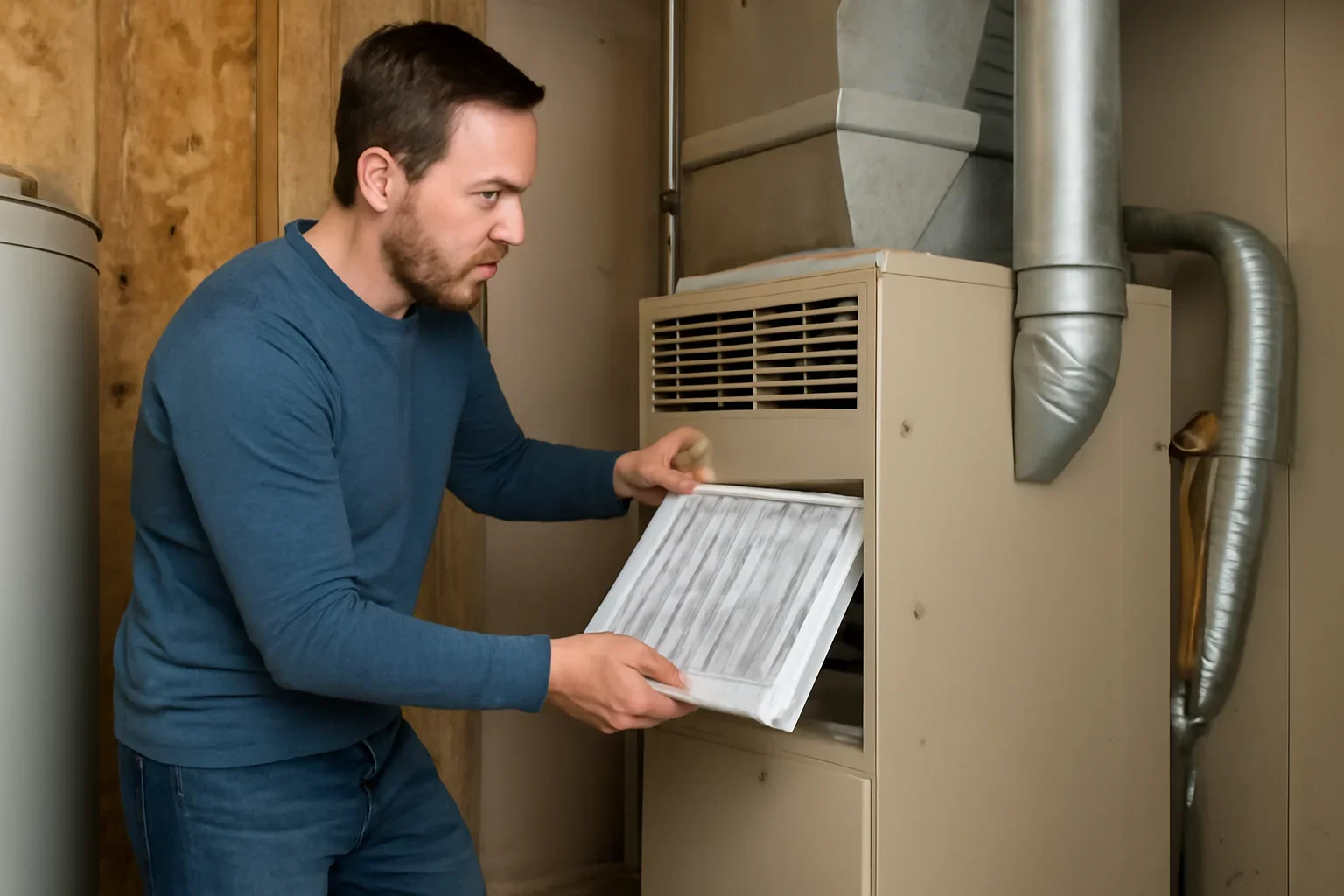
Quick Answer: Check your furnace filter monthly and replace it when it looks dirty, airflow drops, or your home starts feeling dustier or less comfortable. In Oklahoma, filters often load faster during long cooling seasons, winter heating runs, windy weather, high pollen periods, and in homes with pets or allergy concerns.
What Changes the Schedule from One Oklahoma Home to Another
There is no one-size-fits-all filter timeline. The right replacement schedule depends on the filter itself, how hard the system runs, and what is moving through the air inside and outside your home. Generic packaging timelines are a starting point, not a promise — two identical filters in two similar-sized homes can wear out at very different rates.

Condition tells you more than a calendar. A visibly loaded filter should come out regardless of when it went in.
Filter size and type
A 1-inch filter typically has less surface area and fills faster than a 4- or 5-inch media filter. The filter's thickness, material, and MERV rating all affect how long it can hold particles before airflow starts to suffer. Always check the manufacturer's recommended replacement interval as a baseline — but treat it as a maximum, not a target.
Pets, people, and allergies
Pet hair and dander are among the fastest ways to shorten a filter's useful life. Homes with dogs or cats often need filter checks every 2–3 weeks rather than monthly. If anyone in the home has allergies, asthma, or other respiratory sensitivities, keeping the filter clean matters more — a loaded filter recirculates what it can no longer trap.
Dust, pollen, and Oklahoma conditions
Oklahoma's windblown dust, spring pollen seasons, and long stretches of dry summer weather all increase the particulate load on your filter. Homes near construction, gravel roads, or open land often see filters load noticeably faster. During high-dust periods, add a mid-month check to your routine.
System runtime
The more the blower runs, the more air passes through the filter — and the faster it fills. Oklahoma's long cooling season means many systems run for 8–12 hours a day through the summer. A filter that might last six weeks in a mild-climate home may need attention in three or four weeks here.
How to Tell a Filter Needs Attention
The most reliable signal is the filter itself. Pull it out, hold it up to a light source, and look at how much of the media is visible. A new filter lets light through easily. A filter that is ready for replacement looks grey, packed, or visibly restricted — light barely passes through. Do not wait for a comfort problem to check it.
Look at condition, not just the calendar
If the filter looks dirty, replace it — regardless of whether the date has come around. A calendar reminder is useful for making sure you check, but the filter's actual appearance is the deciding factor. Some months your filter will still look clean; others it will be overdue before the month is out.
Watch for comfort and airflow clues
Weak airflow from vents, rooms that take longer to reach temperature, stuffy air, or more dust settling on surfaces are all signs the filter may be restricting the system. These clues often appear before you would notice a problem visually, so if something feels off, check the filter first before assuming a bigger issue.
Choose the right filter for the system
The best filter is one your system is designed to handle. Jumping to a high-MERV filter in a system built for standard filtration can create its own airflow problems — the blower has to work harder to pull air through a denser media, which raises energy use and puts extra strain on the equipment. Check your system documentation or ask your HVAC contractor which MERV range is appropriate before upgrading.
Filter Replacement Triggers at a Glance
| What You Notice | What to Do |
|---|---|
| Standard 1-inch filter during heavy HVAC use | Inspect monthly; replace when dirty or when airflow starts to drop |
| Thicker 4- or 5-inch media filter | Follow manufacturer guidance and still check regularly for buildup |
| Pets, allergies, high dust load, or recent remodeling | Shorten the inspection cycle — the filter may load significantly faster |
| Visible grey or packed media | Replace immediately, regardless of how recently it was installed |
| More dust indoors, weaker airflow, or stuffy rooms | Check the filter first; replace if it is loaded and monitor whether comfort improves |
| Active allergy season (spring pollen, autumn mould) | Stay consistent with monthly checks; consider mid-month checks during peak periods |
Why Filter Discipline Matters in Oklahoma Homes
In Oklahoma, your HVAC filter supports comfort in both heating and cooling seasons. The state's long summers mean the system runs heavily from late April through October. Add winter heating demand on top of that and your filter is working almost year-round — which is more runtime than most national filter guidelines assume.
When a filter is neglected, airflow suffers. A restricted filter forces the blower to work harder to move the same volume of air, which raises energy costs, increases equipment wear, and can lead to premature component failure. It also means the system circulates more of what the filter can no longer catch — dust, allergens, and fine particles — back into the living space.
Oklahoma's windblown dust and seasonal pollen add to that load. During dry, windy spring and autumn periods, what gets tracked in through doors and windows — and what enters through fresh-air pathways — can noticeably shorten a filter's effective life. If your filters are consistently looking full well before the manufacturer's suggested interval, that is useful information: it points to a home with a high particulate load that may benefit from a better filtration setup.

If filter changes are not solving airflow or comfort problems, the issue may go deeper than the filter itself.
Smith Brothers Heat & Air has been serving Oklahoma City-area homeowners since 1999. We cover Oklahoma City, Edmond, Norman, Moore, Yukon, Midwest City, Mustang, Nichols Hills, Del City, The Village, and Bethany. If your filter clogs unusually fast or airflow problems continue after replacement, the issue may go beyond the filter and need a professional inspection.
Frequently Asked Questions
How often should I change a 1-inch furnace filter in Oklahoma?
Many 1-inch filters need to be checked monthly and often replaced more frequently than thicker filters — especially when heating or cooling demand is high, or the home has pets, dust, or allergy concerns. In Oklahoma's long cooling season, a 30-day check is a sensible baseline. Some homes will need replacement every 3–4 weeks during peak use.
Can I use a higher-MERV filter for better air quality?
Only if your system is designed for it. A more restrictive filter is not automatically better — some systems lose meaningful airflow when the filter is too dense, which creates its own comfort and efficiency problems. Check your equipment documentation or ask your HVAC contractor before upgrading to a higher MERV rating.
Can I just replace the filter on the first of every month?
You can use a calendar reminder to make sure you check, but condition-based replacement is more accurate. Some months your filter will still look clean; others it will need changing before the month is out. The filter's actual appearance and your system's airflow are better guides than a fixed date.
Does the same filter affect both heating and cooling performance?
Yes. The blower that moves air through your filter runs in both heating and cooling mode. A restricted filter creates the same airflow problem in both seasons — longer run times, uneven temperatures, and higher energy use regardless of whether the thermostat is set to heat or cool.
When should Smith Brothers look beyond the filter?
If a new filter does not resolve weak airflow, uneven rooms, excess dust, or system strain, there may be a larger issue. Duct leaks, return-air sizing problems, or equipment faults can all produce the same symptoms as a dirty filter. A professional diagnosis is the right next step when filter changes are not solving the problem.
Need a Local Answer for Your Own System?
Tell us what type of filter you use, how often you replace it, whether you have pets, and whether any rooms feel dusty, stuffy, or uneven. That gives us a better starting point for recommending the right next step.
Smith Brothers Heat & Air — family-owned, serving Oklahoma City since 1999.
Helpful Next Steps
- Furnace Maintenance — how maintenance, airflow checks, and seasonal service help your system run cleaner and more reliably.
- Air Filtration — how the right filtration setup can improve indoor air quality, reduce dust, and support system performance.
- Contact Us — share a few details about your filter, airflow concerns, or indoor air quality issues and we will point you in the right direction.